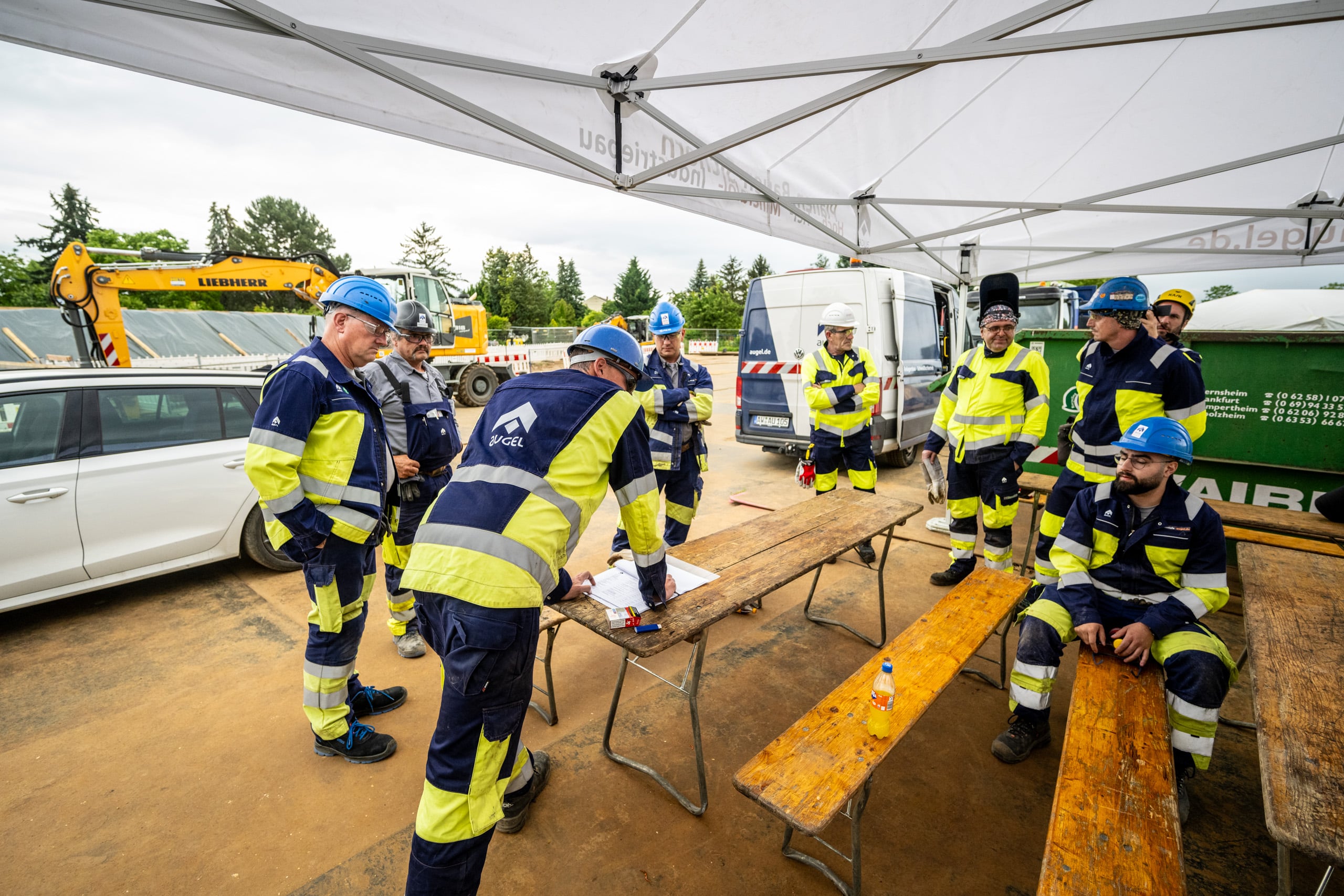
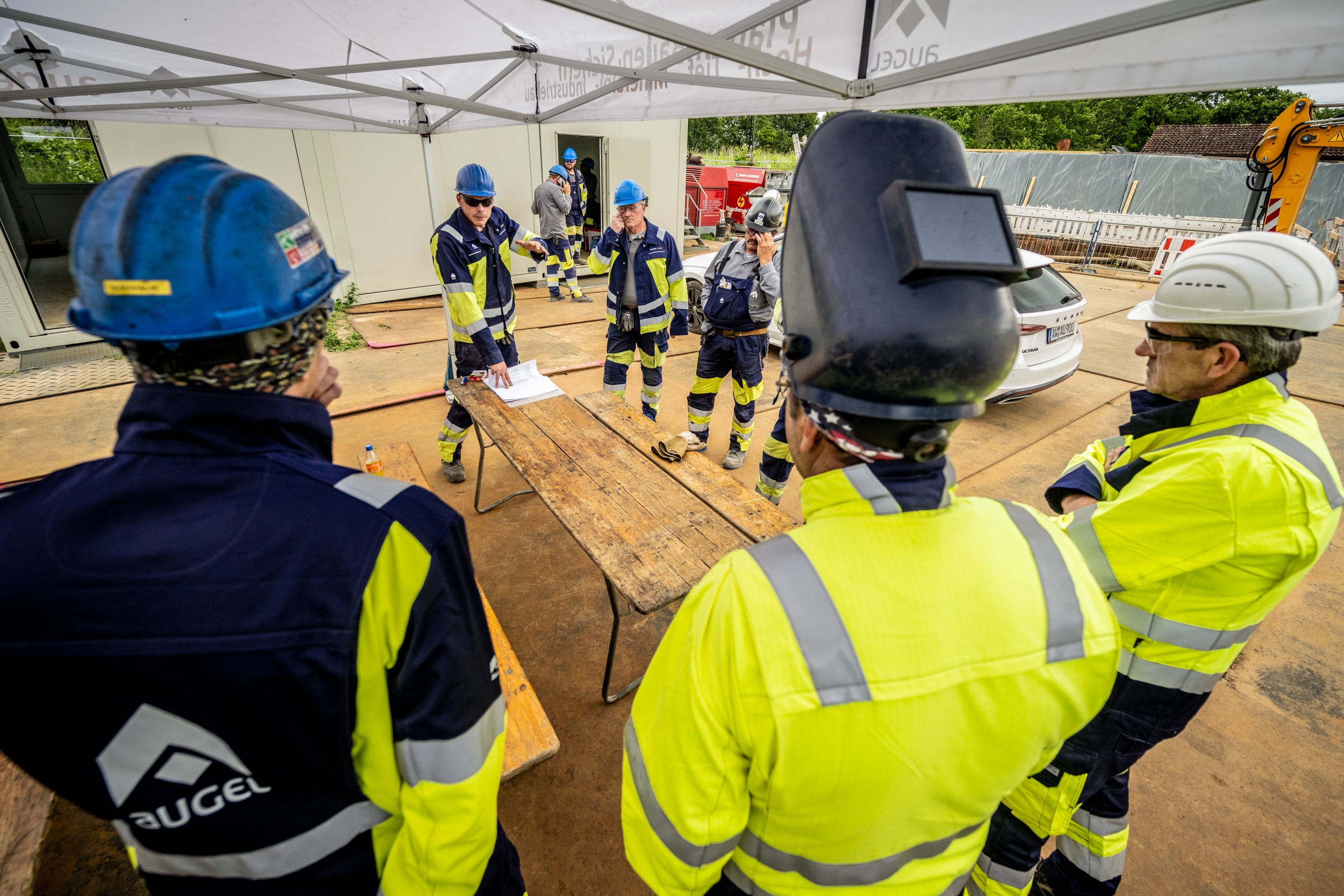
How do you repair the casing pipe of a product pipeline that runs beneath a heavily trafficked railroad track and a major highway? In Bischofsheim, our problem solvers faced this challenging renovation project.

Augel GmbH
Windkaulweg 1
D-56745 Weibern
Tel 02655/9500-0
Fax 02655/9500-45
info@augel.de
www.augel.de
How do you repair the casing pipe of a product pipeline that runs beneath a heavily trafficked railroad track and a major highway? In Bischofsheim, our problem solvers faced this challenging renovation project.
Initial situation
An approximately 87-meter-long section of a product pipeline running inside a casing pipe was to be replaced. The conditions were challenging: work had to be performed beneath an existing railroad track and a federal highway, access to the casing pipe was limited, and the water table was high in the area between the Rhine and Main rivers.
Excavation of the foundation pits
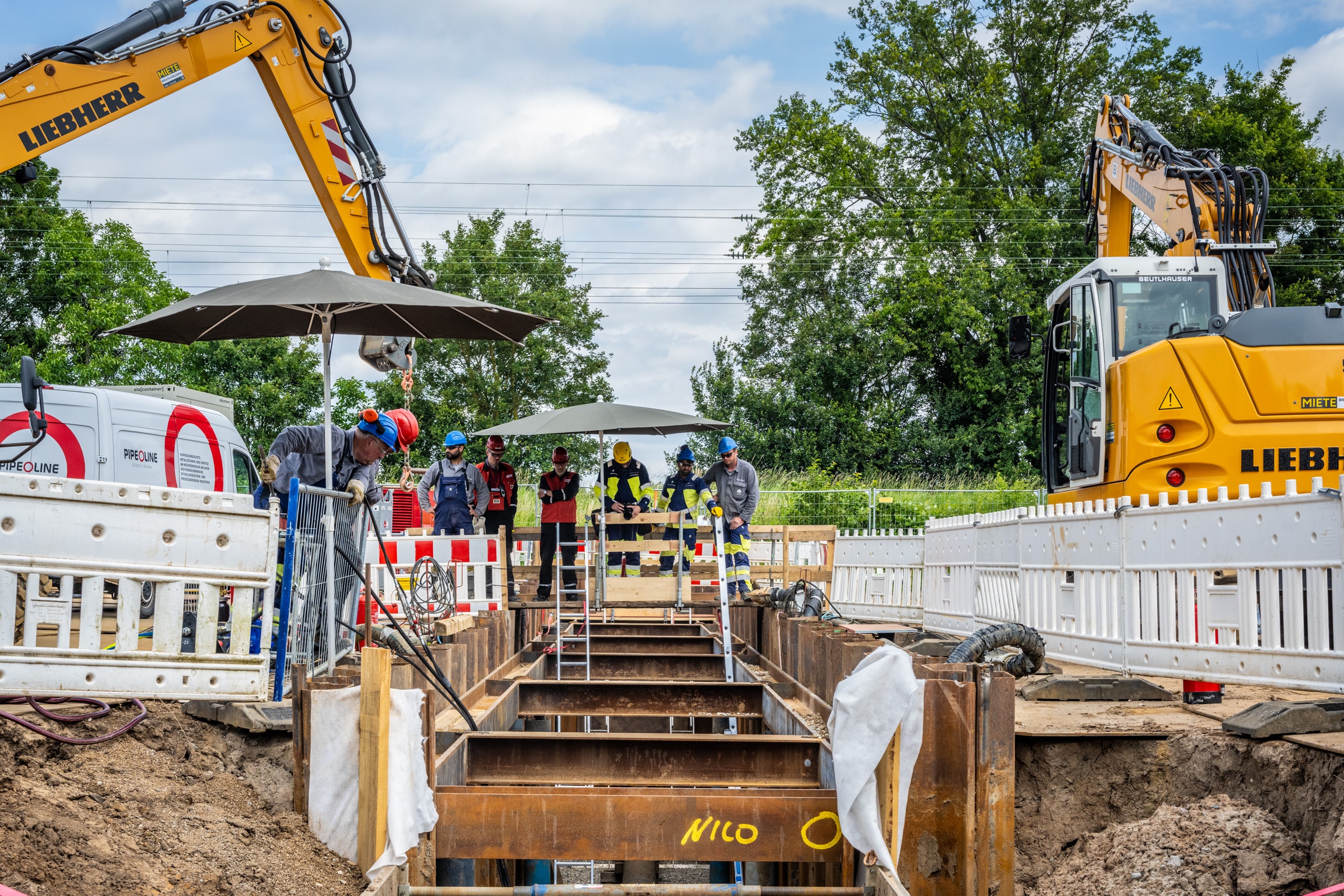
For this construction project, our team dug excavation pits on both sides of the railway line, measuring 26 m and 10 m in length, respectively, and 4.50 m in depth. Sheet piling was used to secure the excavation pits.
Before installing these, the Explosive Ordnance Disposal Unit drilled through the support structures and verified that the area was safe. Several wells were installed to lower the water level in the work area, which was particularly high in that section.
Challenge: High water table
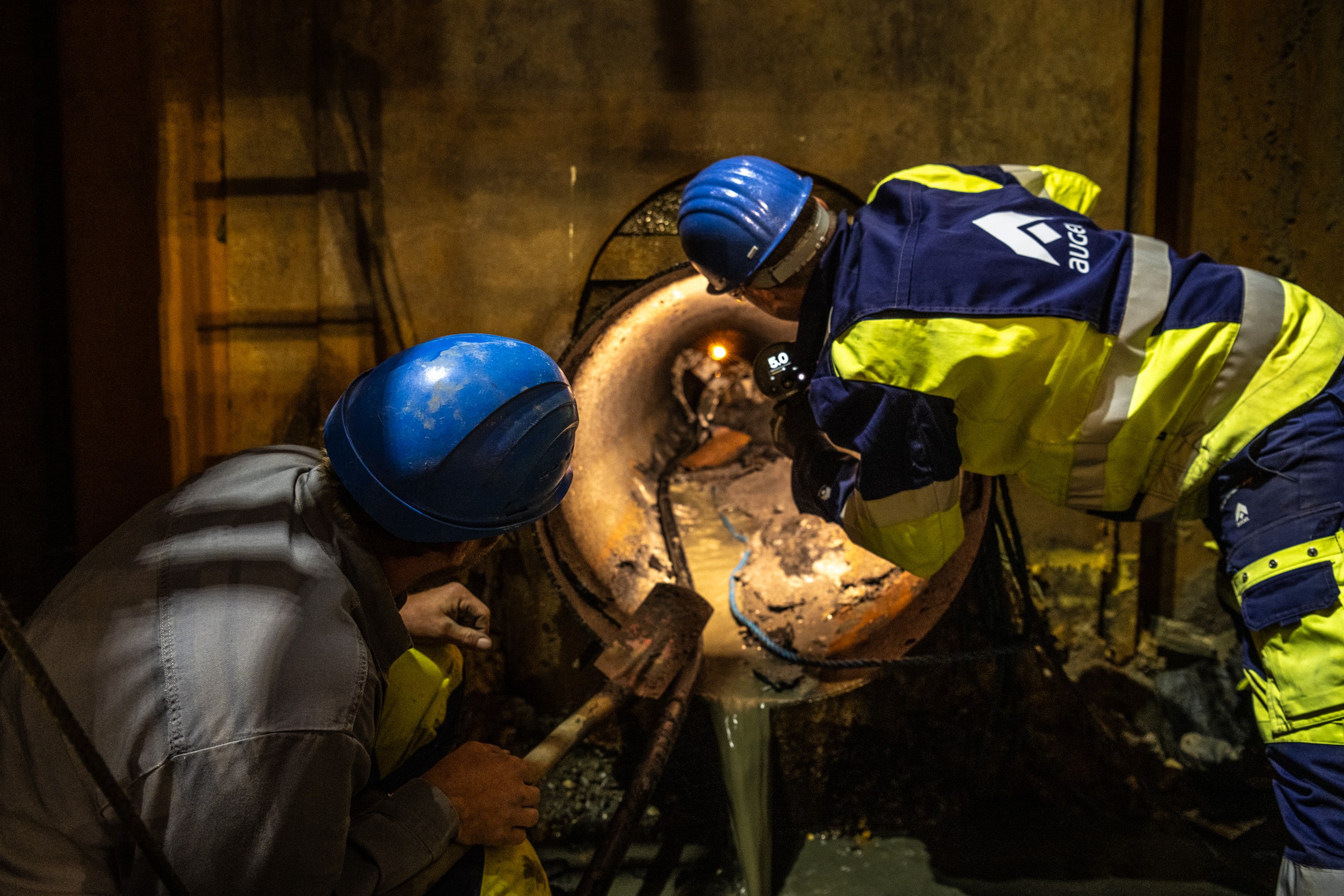
Despite the drainage wells installed in advance, water seeped in as excavation continued near the end wall, washing sand into the larger excavation pit. Since damage to the railway embankment was a possibility, a quick and technically sound solution was required.
By grouting the headwall with polyurethane resin, water ingress was significantly reduced and the stability of the subgrade in the area of the railway embankment was restored.
Pipeline section replacement within 4 days
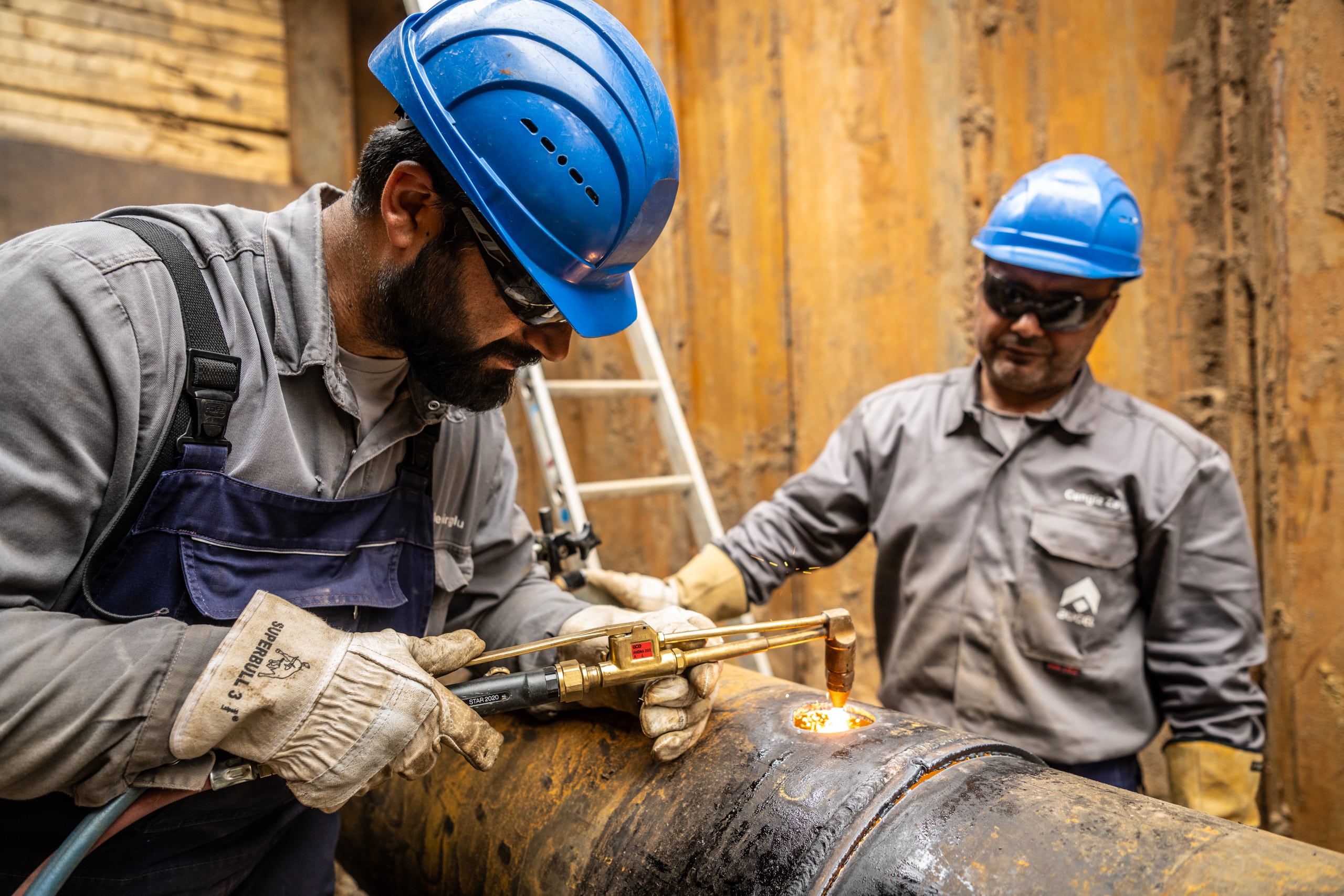
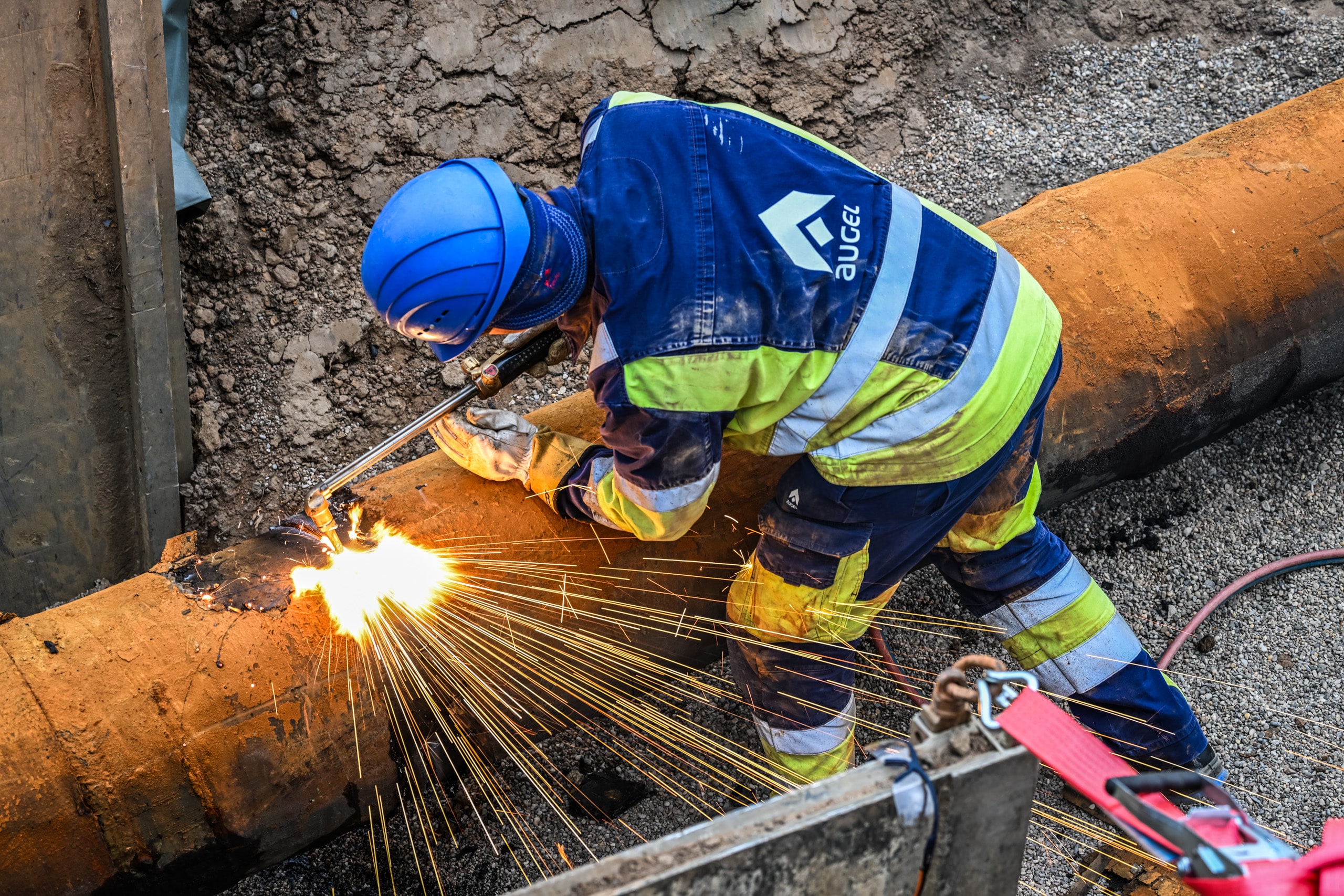
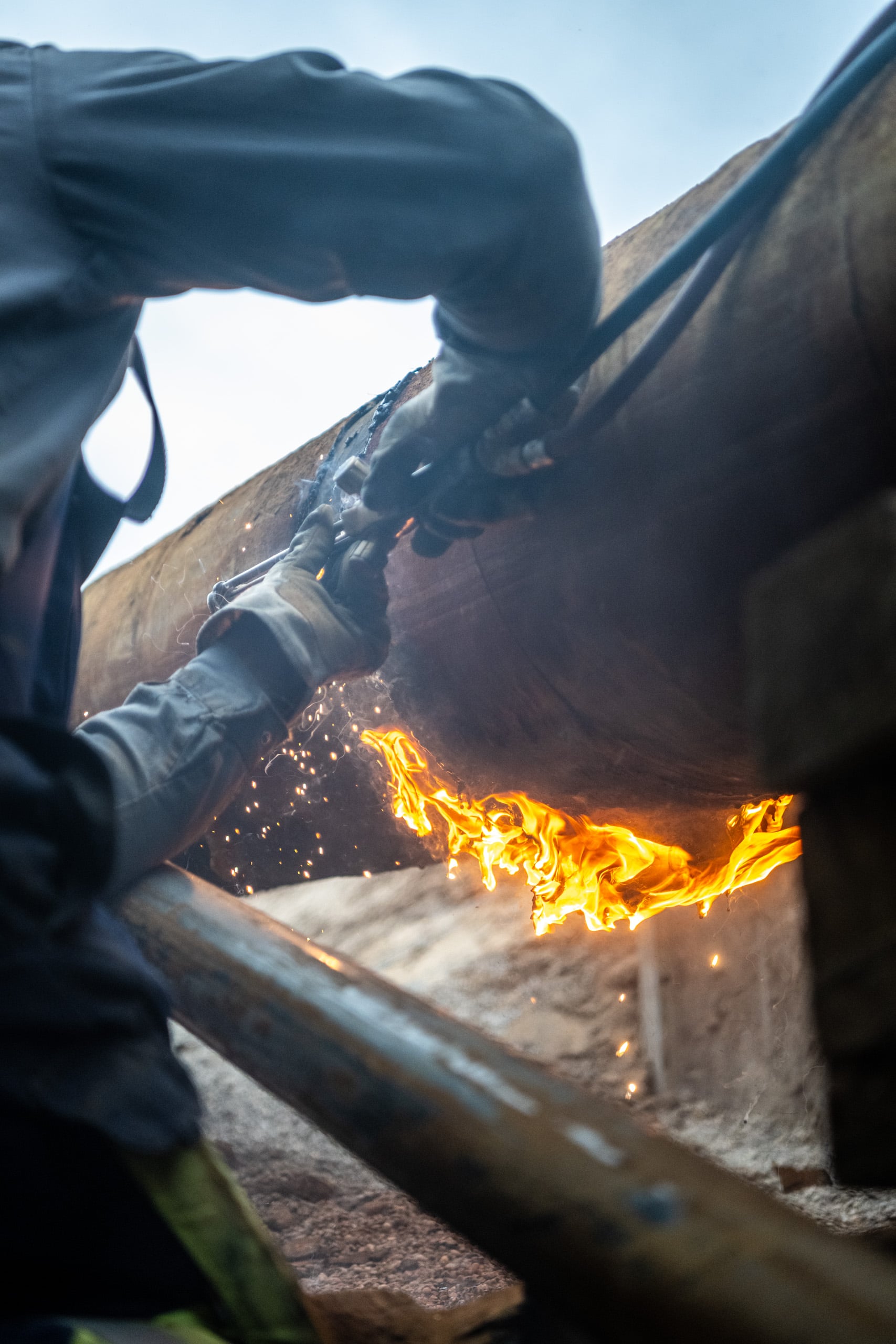
Cutting the 87.10-meter-long casing pipe allowed the work area to be optimized. A tight four-day window was available for replacing the section in order to keep the interruption of pipeline operations as brief as possible. As a result, the team worked in two shifts.
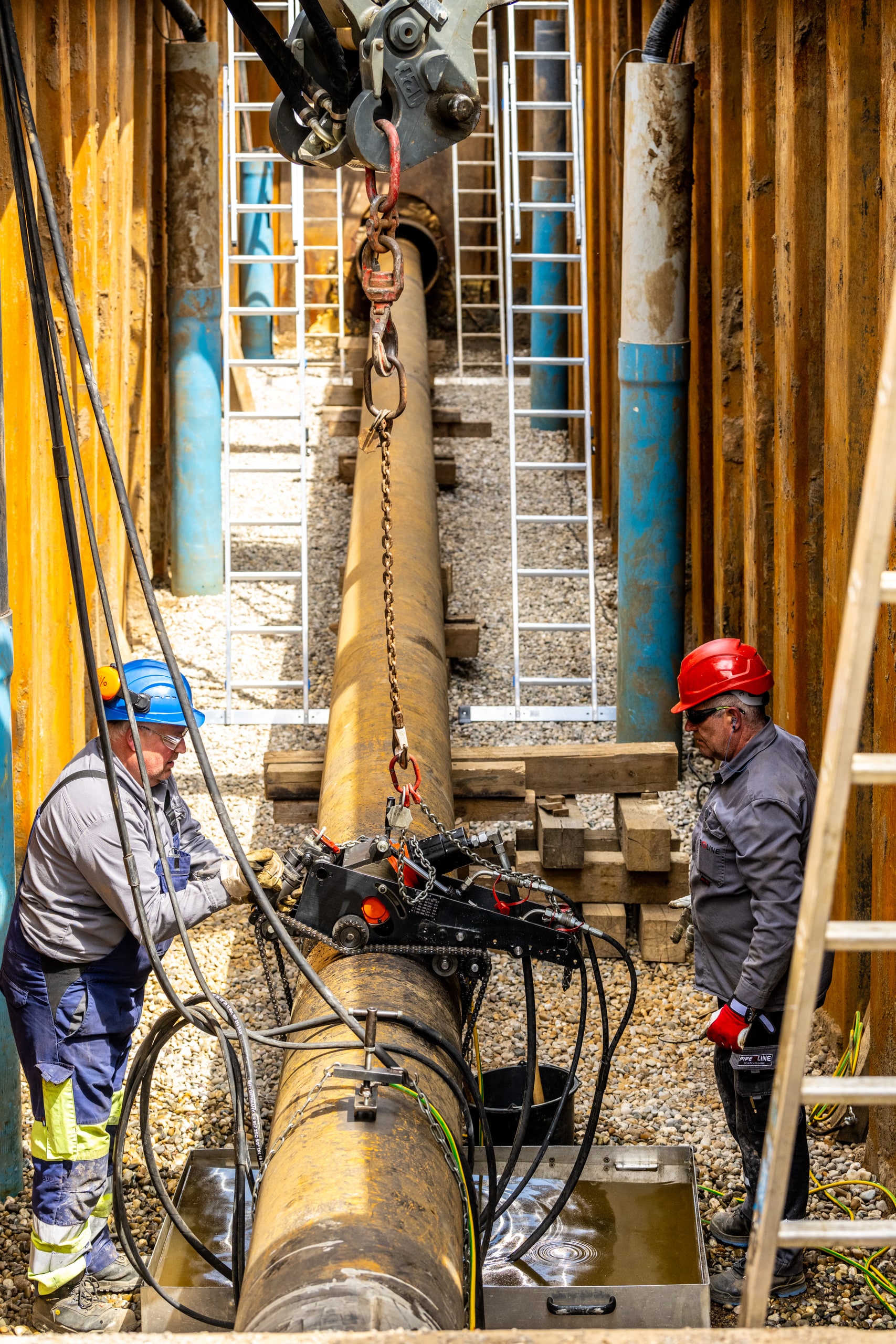
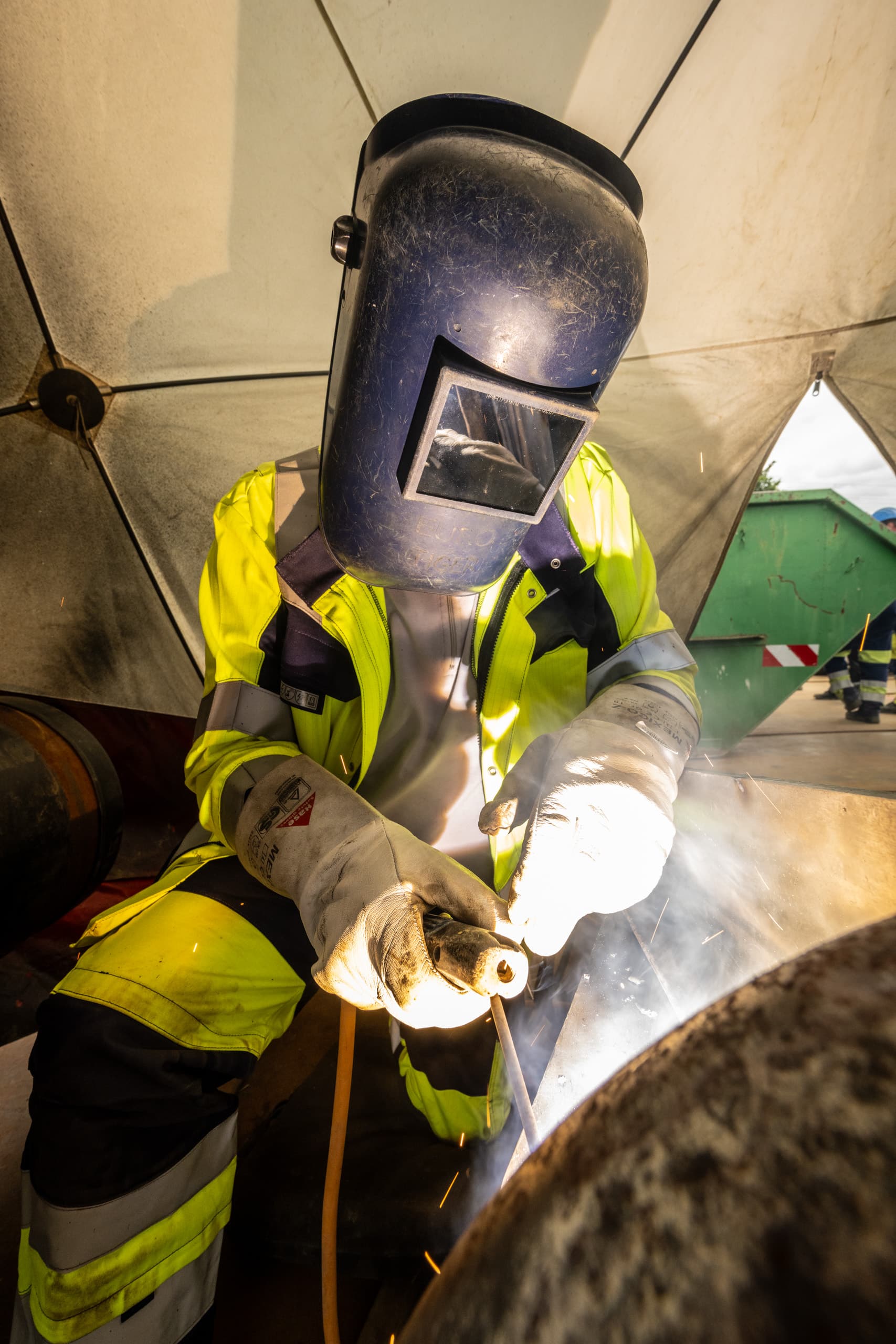
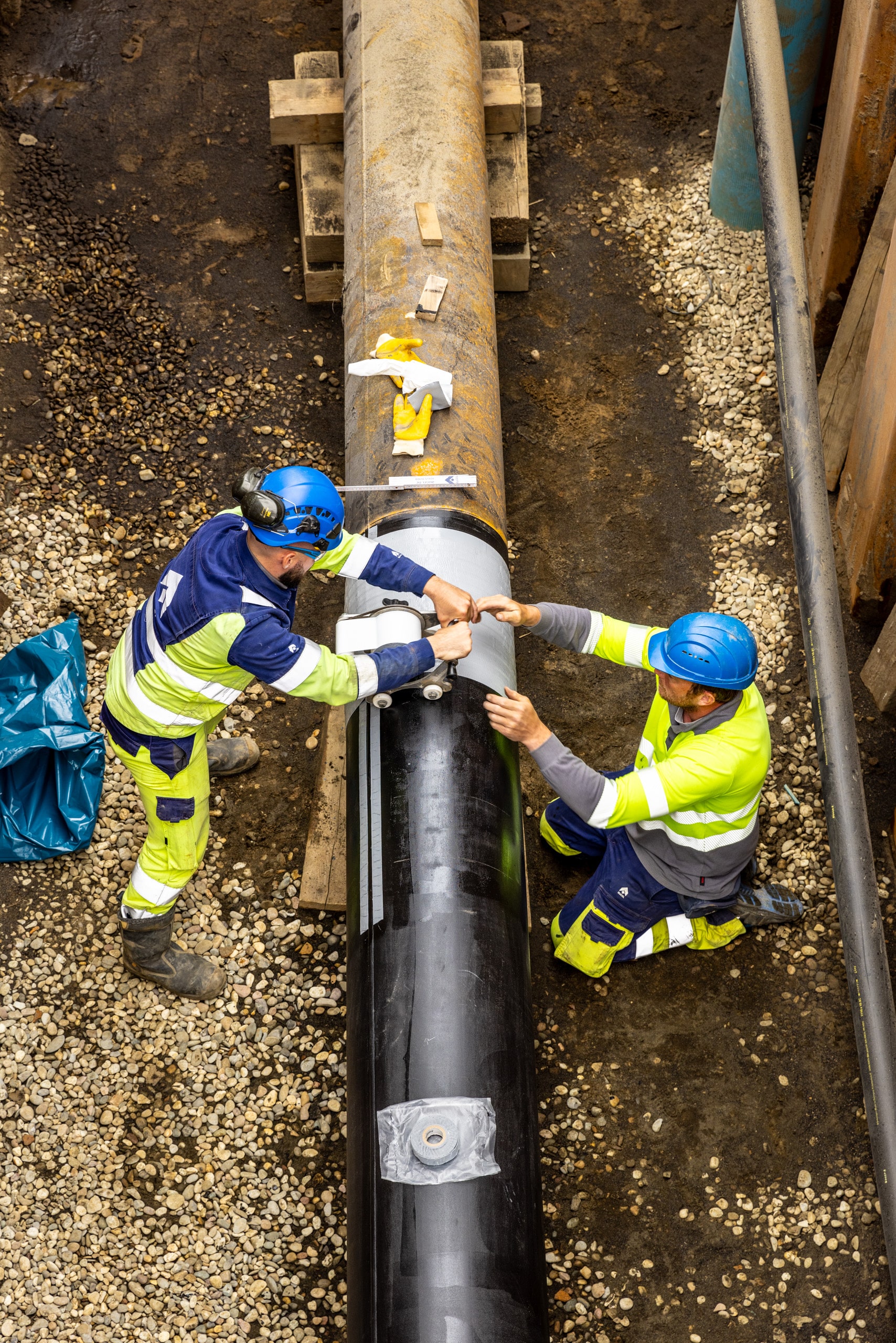
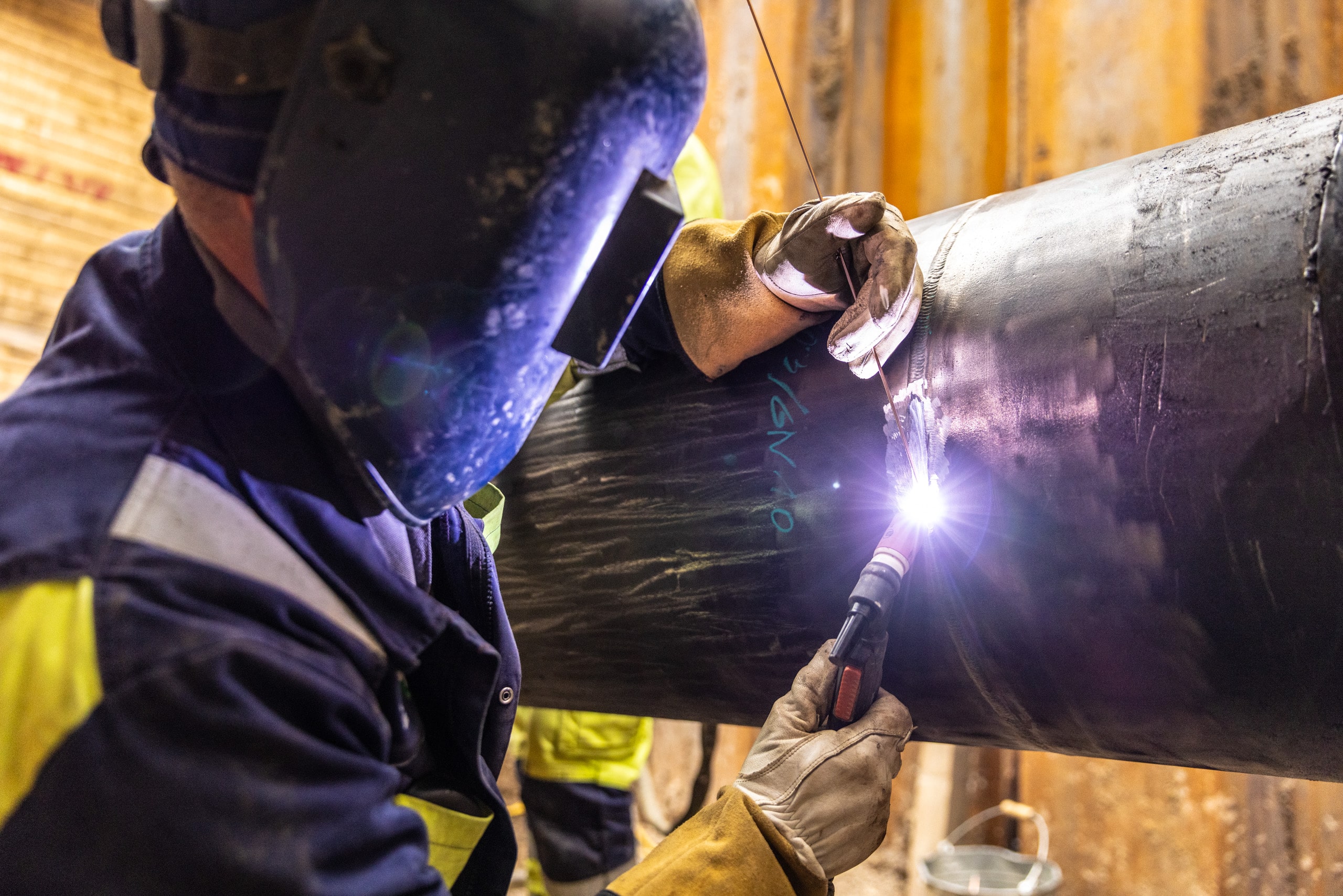
The old pipe, which had a damaged bituminous coating, was removed from the casing in sections. The five new pipeline sections were prepared on site in advance, welded together in the excavation pit, and wrapped with PE tape after the welds were inspected. An additional 60 meters of the pipe were coated with glass-fiber-reinforced plastic (GFRP).
After inserting the spacer, the gap between the outer pipe and the product pipe was then filled with sealant to ensure a secure fit and long-lasting corrosion protection.
Outcome: Operational reliability significantly improved
Replacing the section of pipeline running through the jacket pipe significantly improved the operational safety of the RMR pipeline in a sensitive infrastructure corridor without disrupting rail traffic.